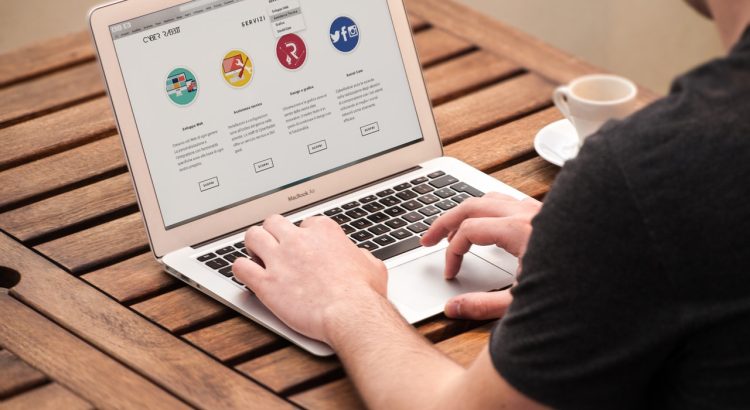
Small and focused web design approaches have become increasingly popular as businesses look for faster, clearer, and more conversion-driven online experiences. Many companies are moving away from complex multi-page structures and toward simplified layouts that prioritise user action and clarity.
A growing example of this trend is the use of a one page mini business website, which condenses all essential information into a single, scrollable experience. This format is designed to reduce friction, guide attention, and encourage users to take a specific action without distractions or unnecessary navigation.
For small businesses, freelancers, and service providers, this approach is particularly useful when the goal is lead generation or quick conversions rather than extensive content delivery. The simplicity of the structure allows visitors to understand the offer quickly and decide faster.
This article explores how and why this design approach can improve conversion rates, what elements make it effective, and when it is the most suitable choice for digital performance.
Why simplified structure improves conversions
A simplified structure removes many of the barriers that typically slow down user decision-making. When visitors land on a page, they are often overwhelmed by too many options, links, or competing messages. Reducing these distractions helps maintain focus on the primary goal of the site.
A streamlined layout guides users in a linear flow, which is especially effective for service-based businesses. Instead of forcing visitors to navigate multiple pages, everything they need is presented in a structured sequence.
This approach works well because attention spans online are short. Users tend to scan rather than read in depth, so a clear visual hierarchy becomes essential for engagement.
Faster user decision-making and reduced friction
Speed of decision-making plays a major role in conversion success. When information is easy to find and understand, users are more likely to act quickly. In many cases, a simplified format such as a one page mini business website supports this process by keeping everything in one place.
By removing navigation menus that lead away from the main message, users are less likely to become distracted. Instead, they follow a natural progression from introduction to offer, and finally to call-to-action.
Psychologically, this reduces hesitation. The fewer steps required to understand a service, the more likely a visitor is to complete an enquiry, sign-up, or purchase.
The structure also helps eliminate “analysis paralysis,” where too many choices delay action. Instead of comparing multiple pages, users are gently guided toward a single decision path.
Key design elements that drive engagement
Effective single-page designs rely on intentional structure rather than minimal content alone. Every section must serve a purpose in guiding the user toward conversion.
Key elements often include:
- A strong opening statement that clearly defines the service or offer
- Social proof such as testimonials or reviews to build trust
- Clear benefit-focused messaging that highlights value
- Visually distinct call-to-action sections placed strategically
- Simple navigation anchors for smooth scrolling
Each of these elements contributes to a cohesive experience that keeps users engaged from top to bottom.
Within a well-structured one page mini business website, these elements are arranged in a logical order that mirrors the user journey. This ensures that curiosity is gradually transformed into intent, and intent into action.
Visual hierarchy also plays an important role. Larger headings, contrasting sections, and spacing help guide the eye naturally through the content without overwhelming the visitor.
Consistency in messaging is equally important. When the tone and value proposition remain aligned throughout the page, users are more likely to trust the offer and continue engaging.
SEO and mobile performance advantages
Modern web traffic is heavily dominated by mobile users, which makes performance and responsiveness critical. Single-page layouts often load faster and adapt more easily to mobile screens.
Because all content is contained within one structure, search engines can also interpret the page more clearly when it is properly optimised. This can help improve visibility for targeted keywords and service-based searches.
A well-planned one page mini business website can also reduce bounce rates. When users find everything they need without clicking away, they are more likely to stay longer and engage with the content.
Another advantage is simplified tracking and analytics. With fewer pages, it becomes easier to understand how users interact with the site and where drop-offs occur. This allows for more precise optimisation over time.
Mobile usability is especially important in conversion-focused design. Buttons, forms, and calls-to-action must be easy to tap and complete without unnecessary scrolling or confusion.
Common mistakes to avoid in single-page design
While the format can be highly effective, it can also fail if not structured properly. One of the most common issues is overcrowding the page with too much information. This defeats the purpose of simplification and can overwhelm users.
Another mistake is weak or unclear calls-to-action. If users are not clearly told what to do next, they may leave without converting.
Poor pacing is also a problem. Content sections that are not logically ordered can confuse visitors and reduce engagement.
Trust signals should not be neglected. Without visible credibility markers, users may hesitate to take action, especially for service-based offerings.
The following issues are particularly important to avoid:
- Overloading sections with long paragraphs instead of concise messaging
- Placing important conversion elements too far down the page
- Using inconsistent design styles that break visual flow
- Failing to optimise for mobile interaction and speed
Each of these can significantly reduce the effectiveness of even a well-intended layout.
When a focused single-page approach is most effective
A single-page design is not suitable for every type of website, but it excels in specific situations where clarity and speed matter most. Service providers, consultants, and small businesses often benefit from this structure because their goal is usually direct enquiry generation.
It is also effective for product launches, event promotions, and limited-service offerings where users only need essential information before making a decision.
When content complexity is low to moderate, this format helps streamline communication and reduce cognitive load. However, for large businesses with multiple categories or extensive content libraries, a multi-page structure may still be more appropriate.
In many cases, businesses choose a hybrid approach, starting with a one page mini business website for focused campaigns while maintaining a broader site for long-term growth.
The effectiveness of this approach depends heavily on clarity of message, strong visual structure, and a well-defined user journey. When these elements align, conversion performance can improve significantly.